Episode Transcript
[00:00:00] Speaker A: Have you ever noticed that some people seem to have a reservoir of wealth within themselves?
So they feel happy, they feel relaxed, they feel good. And even if life throws things at them, they can handle it. They don't fall to pieces.
Whereas other people, everything seems to be crazy all the time and they fall apart. And this thing happens, and this thing happens. What is the real difference?
The real difference is actually something called the account of accumulation, or our karmic bank account.
It's based on all the things we've done over the years that are in the soul.
And we're living inside our karma. And today we're talking about how to increase your spiritual account of accumulation, which goes with you after you die. So it affects you now and it affects you in the future.
So this is perhaps the most important thing we could be talking about. This is really the key thing of our lives. Everything we're doing is either increasing this account or reducing it.
So let's jump into this.
[00:01:05] Speaker B: Hey.
[00:01:06] Speaker A: Hello.
[00:01:07] Speaker B: Hello.
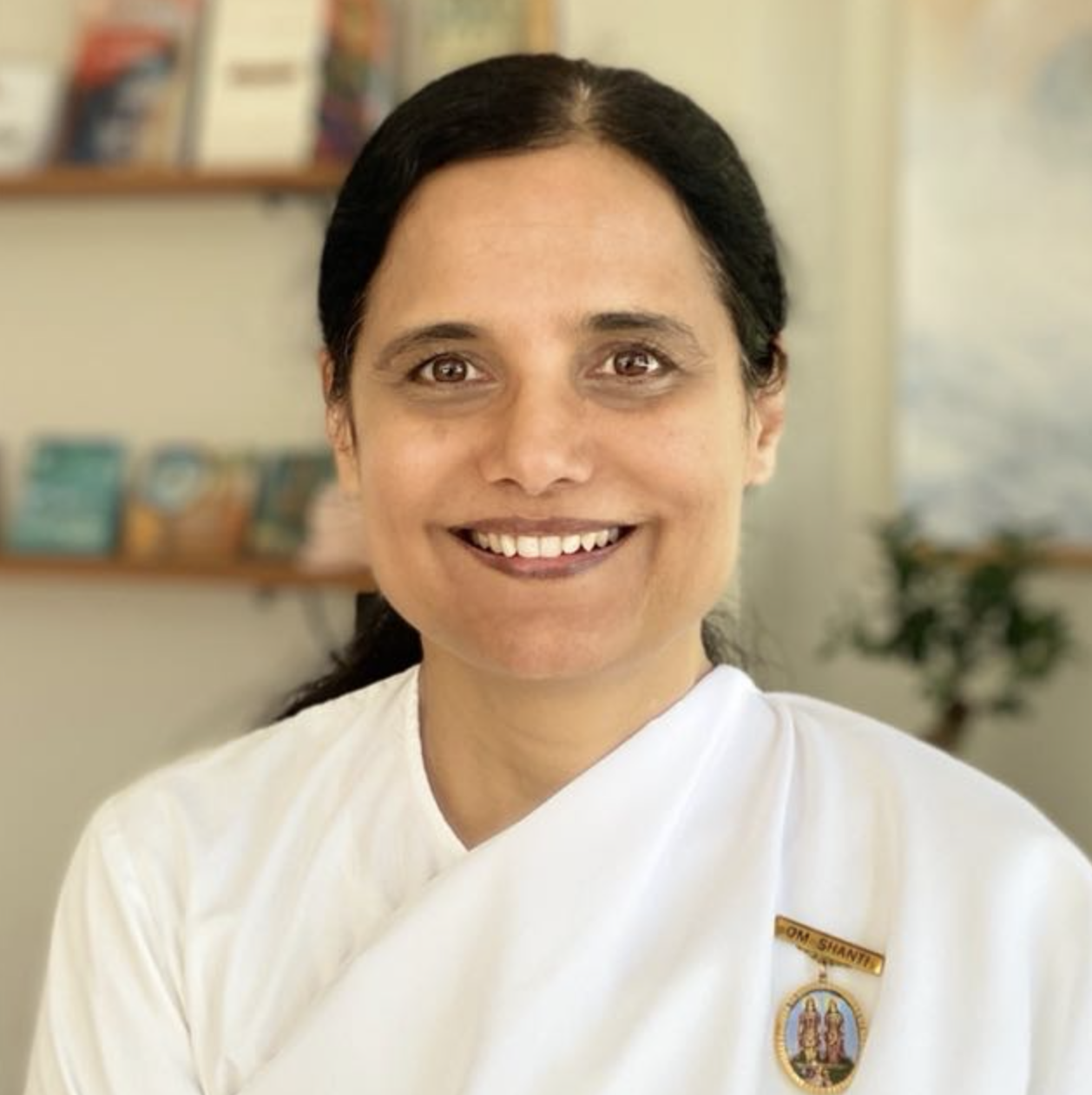
[00:01:07] Speaker A: Shereen, you've got a wonderful karmic bank account, haven't you? Look at that beautiful smile.
You've been creating good fortune for many years.
[00:01:18] Speaker B: Thank you.
So thank you for the book.
[00:01:21] Speaker A: Yes, well, it's good. You know, we. So we're always doing stuff.
Most people think about their physical bank account. How much money do I have in my bank account?
And we have a profit and loss. You know, how much am I spending? How much am I earning?
How much am I accumulating?
[00:01:36] Speaker B: Yeah, you know, my.
Right, my. What do you call it? Investments, Your portfolio.
Right. You're thinking about these things all the time.
[00:01:47] Speaker A: Right. And so everyone's worried about their money and how much they have or how much they're losing.
But we have a karmic bank account, which causes the physical bank account actually, as well as everything else. And our health and everything, our happiness, health, wealth and happiness are all based on our spiritual bank account, ultimately.
So how do we raise our bank account?
I am. I'm going to read something actually. But do you want to share anything before I share?
[00:02:20] Speaker B: No, go ahead.
[00:02:21] Speaker A: So I'm going to read. So these some advanced teachings here that you might like.
So everyone has an account of accumulation.
You've been told that there are three types of accounts, spiritual accounts and three types of accumulation. And here's what they are.
The first is to accumulate spiritual treasures according to your own efforts.
So what we do ourselves, that's one way we can increase our account.
The second is the account of blessings.
The way to accumulate your account of blessings is While being busy doing service and having connections and relationships with others with your thoughts, words and actions, all three remain constantly content with yourself and make others constantly content too.
Contentment.
This is a secret. I bet you didn't know this. Contentment increases the account of blessings.
And the third is the account of charity, or punya, you know, higher this. Charity is not quite the right word. We'll explain what it means in a minute. The method for the account of charity is whatever service you do with your mind, words and actions, through having relationships and connections with others, always serve with an altruistic and unlimited attitude.
Nature, intentions and feelings.
Serve with your nature, your good intentions and good feelings.
By doing so, you automatically accumulate in your account of charity.
So check. Do you know how to check?
Do you know how to check? Right.
So we have three accounts, three ways we can increase our karmic bank, basically.
And I, after reading this, I decided to buy this special journal because I felt it should go in a golden journal. Because anything, because if, if we're serious about our account of accumulation, it should be accounted for and checked in a golden journal. And I, since I can't find a, a pure gold journal, this is going to have to do.
So.
So tell us what you think about this. I'm sure you read this as well, right? The account of blessings, the account of accumulation. What do these things mean from your experience?
[00:04:56] Speaker B: You know, the one thing, right?
Even this is, this is not about money. This is not about productivity. This is not about any of those things. This is, this is really about your inner life.
This whole podcast is about your inner life.
And so your inner life, what that paragraph is stating is that there is a certain amount of accumulation you have with your own efforts.
You could be doing a lot of spiritual practices, doing a lot of good karma, helping a lot of people, all of that. And so you accumulate certain things, accumulate a certain amount of. You could say good deeds, good karma in your account, right?
And that's wonderful, but that's the only thing we are thinking about, right? Oh, I can do this. And then if I do this, this will happen and these things will happen. That's the only thing we are thinking. But what that paragraph is saying, there are two hidden ones you're not thinking about.
And the two hidden ones is one is blessings. Like, you can really get blessings from people. And the way to get blessings from people is be tolerant, be content, don't complain, right? Give good wishes, give pure feelings, you know, be nice to people, all of that, right? That itself is going to give You. You be content with other people. Don't have complaints about them in your head, right? You be content with whatever is happening. You be content, and that itself is an accumulation.
And then the other one, which I thought was very interesting, is the one where we do altruistic service. We are doing without expecting things we are doing because of our altruistic nature. Not because I think I'm going to get praise or I'm going to get money, or I'm going to get this, or I'm going to get that, or I'm feeding something inside, inside me, but I'm really doing it from the goodness of my heart. This very unlimited love, this unlimited attitude.
That is another hidden thing we are not looking at.
[00:07:14] Speaker A: Yeah, so this is very, very deep, right? So we have. We have karma, we have karmic bank account. And normally we're spending by doing stuff because we're using energy up and. But we have to accumulate because these treasures, these spiritual treasures are going to last with us now and in the future.
So materialists don't believe in the future. They think everything's just in the brain. But spiritual people have the consciousness and the awareness that there's more to life than meets the eye. And when you die, it's not the end of your life.
So when you go to the next life, you're going to bring your karma and your treasures into the next life. It's just like, if you feel happy now driving one car, you'll be happy in the next car. Do you know me? But if you're miserable now, you'll be miserable in the other car. It's like we're moving from place to place based on our karma. And not only that, according to the treasures we have now, we create the next thing we get into.
So it's really important not, not just to think about today, but what comes of it down the road. And this actually requires us to kind of get out of this limited Mimi me. What am I going to get now? And just think, hang on a minute, let me expand out to a much bigger reality.
And the only, only thing it requires.
[00:08:45] Speaker B: A very expansive mind.
[00:08:47] Speaker A: It does. It's like I had this experience fairly recently where I was like looking down from above on my life as like the, the timeline was like, longer. And I was like, so that's the past way over there, and this is the future way over here.
And it was very, actually very liberating to see the bigger picture, to not just be here I am today. What do I need to do now?
So what we do now affects our future. And there's three levels of accumulation and I've gone so far as to buy a book that is about what are these three levels and how much have I accumulated in these three accounts? Because this, this message was saying you need to check your chart.
Do you know how to check? Do you know how to check your chart? Do you know how to check it? Is it, you know, you have to check yourself again and again and again because the more we check, the more it increases. So if I'm not checking these three accounts, then chances are they're not going to grow very much, right? Because there's no point in, in having something if you don't check it.
It's not going to grow if you're not looking at it.
[00:10:05] Speaker B: This thing idea of checking, right is so important.
And I was thinking about this like for contentment, right?
In any relationship, with anything you can go into any interaction, even driving on the road, be content with everything that's going on, right? Not oh, this one should have driven that way and that one shouldn't have done that way, but also with your own life, right?
You can only be content with your life if you're really doing high level things, otherwise you can't be content with your life, right? It's, that's just the nature of humanity these days. You can't just, oh, I'm doing, yeah, I'm doing fine, this and that. No, you really deeply want to be content with your life, do good things and, but, and with other people. Just be content. No complaints about anyone, right? And so that's how you check you at the end of the day. How many people did I meet where I was I content with all of that?
[00:11:10] Speaker A: Yeah, it's actually a very, very deep spiritual principle to stop trying to change other people.
You know, it's really a big deal because we sort of think, well, you know, I know this stuff and I want to help these people out. But end of the day, there's a nice expression from the 12 steps that you lay the tools at someone's feet for them to pick up if they want it. But that, that's the royal way of doing service, as you say. Here's this thing that can help you like, like this podcast. We're telling you three ways to increase your karmic accumulation.
If you want to follow these things, then you will increase it. And you don't want to follow it, then that's fine as well because we're not going to get you to do it. It's Totally up to you. We're laying the tools at your feet. And so it takes the pressure off us in our life when we say, I'm not trying to change anyone at.
[00:12:05] Speaker B: All.
[00:12:07] Speaker A: But I need to accumulate myself. That's all I can do, really.
It's a huge relief. Huge, huge, huge relief. Just to say I'm content with everyone, blessings to them and if they want to do something about it, then great, and I'll do the best I can to live a good life, to be an inspiration as I can, and I'll give them options, but at the end of the day, it's up to them.
Huge relief. So let's just get into these three things clearly so you know how you can do it. Right. So the first one is the account of accumulation through your own efforts.
Right. So what do you think that means practically?
[00:12:46] Speaker B: That means that, you know, like we would categorizing thoughts before, right. The category of having waste or negative thoughts, all of that, we have to make active efforts not to have wasteful thoughts, not to have negative thoughts and to have very high level thoughts. Right. That's one effort.
And the other effort is we have to make active effort. In one of the past podcasts you said adharma really is to help people, right. Am I doing enough good karma? Am I doing enough service? Am I doing all of those things? That's one.
And the other one is not to have ego based issues going on in your life and that is so hard to test and to check is because ego is so subtle, it just takes over your life and you don't even know it's taken over your life.
And so ego based issues is a case in point. Is you helping someone and insisting they.
[00:13:55] Speaker A: Change and then getting upset if they.
[00:13:57] Speaker B: Don'T like it and getting upset if they don't.
Right.
That's an ego based issue really. And so all of these things, that is your effort, that is your own effort, is that you're making effort to really improve your mind, improve your concentration, improve your connection with God, improve who you are as a spiritual being. Not just trying to improve Shireen, but improve the soul. Right? That's our own effort.
[00:14:32] Speaker A: So if someone had a pen and paper like this with their golden book, right, what would, what would they be praying down in their account of accumulation in?
[00:14:42] Speaker B: In the first one they're three characters, the first one and effort.
[00:14:45] Speaker A: So how much meditation did I effort.
[00:14:47] Speaker B: Is how so yes, how soul conscious, not specific, not just randomly doing mindlessness, but how soul conscious have I become?
[00:14:57] Speaker A: I'm Aware that I'm a spiritual being, like shifting consciousness being.
[00:15:01] Speaker B: I'm a spiritual giving. Right. Can I hold that for five minutes? Can I hold that for 10 minutes? Like that to how waste thoughts in my interactions with people, how many ways thoughts, how many negative thoughts am I actually having?
3 is how connected I am to the supreme soul. Right, that one.
4. Like how are my vices playing out? A lot like ego and greed. Is it going on and on or am I able to really honestly check them and let them go?
So all of that is our efforts.
[00:15:38] Speaker A: So one is like spiritual practice, specific spiritual practices, being of service, thoughts, words, actions, like how much did I from my own efforts be of service and work on myself? And then the other side, which is sort of a separate category, which related is how many stupid things did I do to screw myself over? You know, basically because that's the other stuff, isn't it? So that kind of is like it's profit and loss. I made this much money today and I lost this much as well. I spent this this much. So it's these two. But on a spiritual level. Right. So that's, that's all our own efforts. What do we gain and what did we spend?
So we see how much accumulation.
And then the second one about contentment, blessings.
So that's about.
[00:16:27] Speaker B: That was interesting, right, that you actually receive blessings from being content.
Right?
We receive blessings by doing good things and stuff, but just by being content, by not correcting someone, by not thinking, you know better, by not really thinking they should do this and that should have happened and this should have happened and why didn't this happen? And you know, all of those things, all of those like nonsense that goes on in your heads about what other people should be doing.
I'm content.
I'm content. I accept where they are, what they're doing and I'm totally content with every single one. That is a very high level spiritual practice.
[00:17:18] Speaker A: So that leads to blessings. Yeah, it's a big deal.
[00:17:22] Speaker B: That leads to blessings. That is what God is saying, that that leads to blessing. It does lead to blessings, which is very unusual.
[00:17:28] Speaker A: Yeah. Because most people are complaining about everything all the time. Even if in there it's like about everything. They complain shouldn't have been like this and why did this happen? And I don't like this and blah, blah.
[00:17:40] Speaker B: There's a lot of commentary, internal commentary going on. No, no commentary. Content. I'm content, I'm wonderful. Everything is fine.
Everything is fine with everyone.
If I am content to that extent with people. Right. That I'm not here to change anyone.
It's like a very.
It's like really seeing the.
The expansiveness of how your acceptance and your love can actually make a difference in people's life. You might think, oh, but it's not okay. They're not doing okay.
Not my business.
Right. My business is to stay content.
Because all I'm doing when I'm looking at someone is I'm feeding an old pattern in myself.
And that pattern needs to go.
It needs to be replaced with contentment. It's contentment. Contentment. Contentment, yeah.
[00:18:43] Speaker A: And it's.
It's not as if trying to force people to change has worked very well, has it?
So we'll read this. I'll read this again. So this second one is the account of blessings. The way to accumulate your account of blessings is, well, busy doing service and having connections and relationships with others with your thoughts, words and actions. All three remain constantly content with yourself and make others constantly content, too.
Contentment increases the account of blessings.
So content with yourself.
[00:19:29] Speaker B: That's beautiful. Actually. That feels so good.
You know, it's so liberating. You know why it's so liberating?
You're not postponing your freedom. Okay. If that person feels this way, then I will do it. And if they don't do it, then I'll feel this way. No, it's very liberating. No one needs to do anything. I can be content.
[00:19:49] Speaker A: Yeah, you can be content with yourself.
[00:19:50] Speaker B: I can be content with them. I can be content with myself. Yeah, I can do that. Whether they are content with me or not, I can't decide that. But I can do these two things very easily.
[00:20:00] Speaker A: It's such a relief to drop.
[00:20:02] Speaker B: It's a doable thing to drop the.
[00:20:06] Speaker A: Expectation, unreasonable expectation that people should do this, this and this and that. Because first of all, we can't change anyone else. So that's just. That's. And that's enough by itself right there. But secondly, trying to force things to happen that are not going to happen anyway because the reality is reality, all it does is. Causes tremendous stress in us.
And then that stress pours forth into other people and they don't like that. So then they're discontent because we're discontent. So there's no benefit in any way whatsoever for anyone involved.
So that's the second one. Now the third one, the account of charity. What's this proper word for this? Punya. Right. It's. Charity is a punya.
[00:20:47] Speaker B: Punya.
[00:20:48] Speaker A: What is. What's the better definition?
[00:20:50] Speaker B: Punya. Means actually punya means a very pure act.
Punya is a very pure act.
And you could say like the connotation. Right. When I was growing up and someone said, oh, they did. Punya means like you needed something and they came through. Right. It's not just any kind of act. Right. Or any kind of charity. It's like you do something in the right at the right time when the need is there.
That is punya. And it's pure. It comes from a very pure place.
[00:21:29] Speaker A: Yeah. So when someone, that someone's in need and you went out of your way to help them, though you didn't get anything out of it, sort of thing, you know, rather than like, I got something.
[00:21:40] Speaker B: Right. That's.
[00:21:41] Speaker A: So Punya.
[00:21:42] Speaker B: Punya really is like a very high level act.
[00:21:45] Speaker A: So.
[00:21:45] Speaker B: Yes.
[00:21:46] Speaker A: So the third one is the account of high level, you know, altruistic actions. In other words, it's a better definition. The method for this account is whatever service you do, whether with your mind, words and actions, and through having relationships and connections with others, always serve with an altruistic and unlimited attitude.
Nature, interactions and feelings serve with your nature, your good intentions, good feelings.
By doing so, you automatically accumulate in your account.
So check. Do you know how to check?
[00:22:39] Speaker B: You know, what it's telling us is, remember what I said about Punya is like, you do it at the time of need, you do something. And that is what the world needs these days is the world needs for us to have unlimited attitude. The world needs for us to have altruistic attitude.
Right. Because everyone is out to get everyone else. Right. It's just so passe. It's like old story, old news. Everyone is out there to get everything.
Like we were talking about in our poetry past podcast about people being so addicted to their phones. Right.
So if you find another person addicted to scrolling, you're not going to. No big deal. Right. It's another one addicted to their. But if you find someone who's absolutely not doing any scrolling, then you're like, yay, Right?
[00:23:36] Speaker A: Praise the Lord.
[00:23:38] Speaker B: Don't you feel Praise the Lord. Exactly that. So this is what, the most unusual thing we can do right now, which is also beneficial for us, is actually, and it's counterintuitive, we think, oh, if I go grab, grab, grab, go get, get, get, I will get something.
But what that paragraph is saying right there is you do it with an altruistic attitude. When someone really needs something, then you will really receive. Then you will really accumulate.
[00:24:10] Speaker A: Yeah. So we can. So the third one in our Wonderful journal that we can have is. Is how much of what I was doing was coming from an unlimited altruistic place without any helping people at the right time, in the right way, without expecting anything in return.
Because that. That's unlimited. And it's being.
It's not what can I get? Because otherwise we're sitting around saying, what's in it for me? What's in it for me? What can I get? You know, so there's hardly anyone who does any of this stuff really. Because most the ego's mindset is, what can I get? Me, me, me. And what else can I get? And how come I haven't got it already? And why are these people making me wait?
The ego, it just wants me, but to. Actually, that's why the irony, of course, is that we have to accumulate something in the first place to be able to give something. So I think this builds on, doesn't it? Because if I fundamentally am not content, which is the second one, then how can I altruistically serve anyone else if I'm not content?
[00:25:16] Speaker B: And also what I've noticed is if you really want to be content with yourself, you need to be making some kind of spiritual effort. Otherwise something inside you will be biting you, saying, no, you're not right. You want self respect, right? You want that self contentment. It doesn't come easy.
You have to make the right spiritual effort to be able to do that. You have to be on the right, you know, on your dharma path. Otherwise there's no contentment. You can't just fake your way out of this.
[00:25:49] Speaker A: Exactly.
So this, this whole thing is about accumulating treasures. So I'll read a little bit more because this is. This very, very deep.
Everyone is. Has accumulated some treasures.
God is giving treasures according to the time we need to have all treasures. Because the treasures are not just for this one life. Now these imperishable treasures are going to be with you for many births, many lives.
You know about the treasure of this time.
The list of treasures has emerged in front of you. So what are this? What is the list of the treasures? All the treasures that we can accumulate from God.
The list of treasures.
Treasures are the virtues.
[00:26:35] Speaker B: It could be so many things.
[00:26:37] Speaker A: The virtues, the knowledge, you know, the God's company, good karma.
Right? So we need to know what these treasures are. Because if we're. If we have a journal, we're accumulating, how much am I? We need to know what it is that we're actually accumulating. So these are spiritual treasures. So for example, let's say peace.
Peace is really a high level thing to have if you think about it, if you feel into it.
[00:27:04] Speaker B: Absolutely.
[00:27:05] Speaker A: Just, just peace.
[00:27:06] Speaker B: It's an underrated virtue.
People think, oh, I need to go for a walk or something and then I'll have peace. But now just sitting here and being peace, at peace with yourself, that's fabulous.
[00:27:19] Speaker A: So it's just having peace.
Peace is huge. Is a big, big, big deal. If some, if we can sit here and we can just feel peace, then we are feeling content, satisfied, you know, relaxed, at ease with life. It's a, it's a big deal having peace. Happiness is a big deal. If I can say I'm feeling happy.
Like every morning I wake up and I'm like, I'm alive. Actually that's what I do when I wake, get out of bed, I go, I'm alive when I wake up because I'm grateful to be alive. I really am. So it's. Do you know, I mean, so these, these are, this is what makes a big difference. If someone has all the physical things in their life, but they haven't got these treasures, these spiritual treasures of the happiness and peace and love and well being and good company and then there's nothing there. Right?
And if we don't have the powers, what are all the powers? Shireen, you must know what they all are, these powers.
[00:28:14] Speaker B: There's so many. Right, but the main powers, you mean or the eight powers. Oh God, I wrote 10 million books on them.
Pack up, withdraw, tolerate, adjust, discern, decide, face, cooperate.
[00:28:31] Speaker A: So these, like we said, list them all out, right? But each one of these is a power. Like for example, the, the power to face things.
It's big, big, big, big, big, big deal, right? I've got this board in the kitchen that says. It doesn't say power face. It says it's easier to do it than to think about it.
Which is the power to face. Basically, if I'm having something in my life that needs dealing with, I can, oh, what am I gonna do about the blah, blah, blah. Just face it directly and just get it done. That's the power to face. Just deal with it.
Power to withdraw, pull out.
[00:29:07] Speaker B: In the other sense, right? In the other sense. I was talking to someone yesterday and they were talking to me about their spouse and they were saying, I'm being kind and my kindness is being taken advantage of.
Right? And I said, but how do you know you're being kind?
No, because my acts are kind. I said, no, but it could be. You're doing it because you're not facing.
[00:29:36] Speaker A: It's true.
[00:29:38] Speaker B: Yeah, she did not want to accept that. I'm like, oops, what do you mean?
[00:29:43] Speaker A: I'm such a nice person.
[00:29:46] Speaker B: Yeah, no, I'm being such a nice person and you're supposed to just side with me. And I'm like, well, you're not facing.
[00:29:54] Speaker A: I think it's a sign of a true friend as you call people out for this.
[00:29:57] Speaker B: You know what people really should do to me is stop talking about their.
I won't give bad. I won't tell them, hey, go face your own insecurities. Why are you talking about this?
[00:30:08] Speaker A: No, I mean it needs to be done, doesn't it? So power to face is a. Is a big, big deal. So you see how powerful any, any one of these like peace is a huge deal.
Power to face is a huge deal just by itself, right? So these treasures get accumulated based on doing these things that we've just talked about. These three things.
And that. That's what life is. And so what the qualification is that someone who has all of these things to the extent that someone is an instrument and has humility to that extent, to that extent he or she accumulates those treasures.
[00:30:50] Speaker B: That is the most important statement in the entire planet Earth. You have to learn to be an instrument. No, I. No, mine.
Because ultimately. Right, Ultimately. Yesterday there was a word in Hindi, it's called Mithya.
Mithya means Mithya Ahankar. Mithya ahankar was translated as false arrogance. But it's actually illusory arrogance. Illusory arrogance means that arrogance that is based on things that don't exist.
Like all our arrogance are based like our. It's not just bad pride, right? It's not just false pride. It's like your whole pride is based on things that don't exist.
[00:31:38] Speaker A: Yeah, it's true, isn't it?
[00:31:39] Speaker B: And so this whole idea of instrument is if I think I'm the doer, I'm not a instrument for God, then I'm actually basing my whole whole everything on something so illusory. Because I'm not the one doing it.
We are instruments for God, right? We need a whole golden journal just to see if I did everything, all my actions today, was it based on me being an instrument of God? Because that is the most important thing we can do is come into that awareness again and again and again as an instrument of God. This is what is happening through me. I'm not the one doing it. No, I. Ness. No minus.
Right? No. My. No. I no, it's God doing it. And every gift we have is actually every wonderful thing we do, right? Whatever wonderful thing, little thing is really a gift that was given so that we can be instruments.
And once we understand that and life is very content, very content.
[00:33:01] Speaker A: These are very, very deep secrets here.
So check with the method of being an instrument and being humble. How many treasures have I accumulated in my account?
The spiritual intoxication of being a soul who is full is automatically visible in the activity and face of a soul who has accumulated these treasures and is full.
So if we feel good, it comes across right? Because we have it. Spiritual intoxication and pride. Spiritual pride is always sparkling on their faces. And to the extent that there is spiritual pride, they will be carefree emperors.
So more spiritual intoxication, better spiritual pride and carefree.
[00:33:52] Speaker B: Carefree really is a very advanced.
[00:33:54] Speaker A: Carefree is advanced. Carefree emperor.
[00:33:58] Speaker B: Very advanced.
To really base it on something concrete and foundational, right? Not just I'm careless and whatever happens, right? But really to feel that sense of freedom and euphoria and ecstasy and all of this, right?
You. It's a very advanced virtue.
[00:34:19] Speaker A: Carefree emperor.
So you see it? How so then how much is it visible? Have you received a mirror?
Can you see your face in the mirror of your heart? Do you have any type of worry what will happen? How will it happen? Perhaps this will happen.
You don't have any of these types of thoughts remaining, do you?
I love this. This is here. A carefree emperor would only have the thought, this is worth writing down this quote.
Whatever is happening is very good and whatever is going to happen is. Will be the best of.
That's carefree Emperor.
So this, this is very, very deep. Hope everyone's this advanced episode today.
So the.
[00:35:22] Speaker B: These are all connected things on the request of brother.
[00:35:25] Speaker A: Well, I thought I was reading. I just thought we need to. I used to. In the previous podcast, I used to have some quotes like this, but we haven't done them recently. So it's about time we brought it back. And if you like these things, we'll do read you more of them. It's very special.
And we can't explain all this to you in these podcasts. It's a bit complicated. But. But giving you the essence here, we can receive all these spiritual treasures.
That's what we have within us, that belongs to us, that goes with us in the future.
And the way to do it is to.
To check it. Because if we're not checking it, then we're not even paying attention and then to, to see am I do, am I doing effort myself to increase these treasures, these virtues, powers, knowledge, am I being content with others as a carefree emperor, you know, and that's a very powerful mantra. Whatever's happening is good and whatever's going to happen will be even better, will be the best.
So, so you imagine that something deeply.
[00:36:27] Speaker B: We have to accept inside.
It's very good, very good. Whatever has happened is great. Whatever is going to happen is even good, even greater. It'll be fabulous.
[00:36:38] Speaker A: Yeah. So whatever's going on, this person didn't show up for this thing or I didn't get this message or they didn't like this or something happened or blah, blah, blah, whatever it is, it's good and whatever's going to happen is going to be better.
That's a high level consciousness and then that creates contentment in us and that also helps others be content and then we can move forward.
Because thinking everything's bad all the time doesn't make everything better, does it?
[00:37:10] Speaker B: Absolutely.
[00:37:13] Speaker A: So there it is. Three things.
[00:37:16] Speaker B: What blessing would you like?
[00:37:18] Speaker A: 26, or maybe contemporary?
[00:37:23] Speaker B: I thought you would pick carefreeness.
[00:37:24] Speaker A: Do you have carefree?
[00:37:25] Speaker B: Carefreeness or contentment?
Yeah, carefree. Yes. 19.
Let's do carefree.
This is God's blessing for you. Carefree.
Your responsibility is made lighter because you deeply trust in God and strive to live out the values and principles you have learned.
Knowing they'll guide you toward the greater good. Fills you with comfort and peace.
[00:38:01] Speaker A: Ah, Ease and grace. Comfort and peace.
Ah, so there it is. You know the three things to increase. You know about all the treasures. Thank you for being here. Thank you, Shireen.
[00:38:18] Speaker B: Thank you for everyone for being here.
[00:38:19] Speaker A: And if you want to learn more about some of these deeper teachings, we have all the links below. We have all these courses, programs. You're most welcome.
And may you accumulate in your account for now and for your future. Many, many lives and all the good things yet to come.
Much.