Episode Transcript
[00:00:00] Speaker A: Welcome to Spiritual Sense podcast where we help you quiet your mind, relax and come back to peace and calm inside yourself.
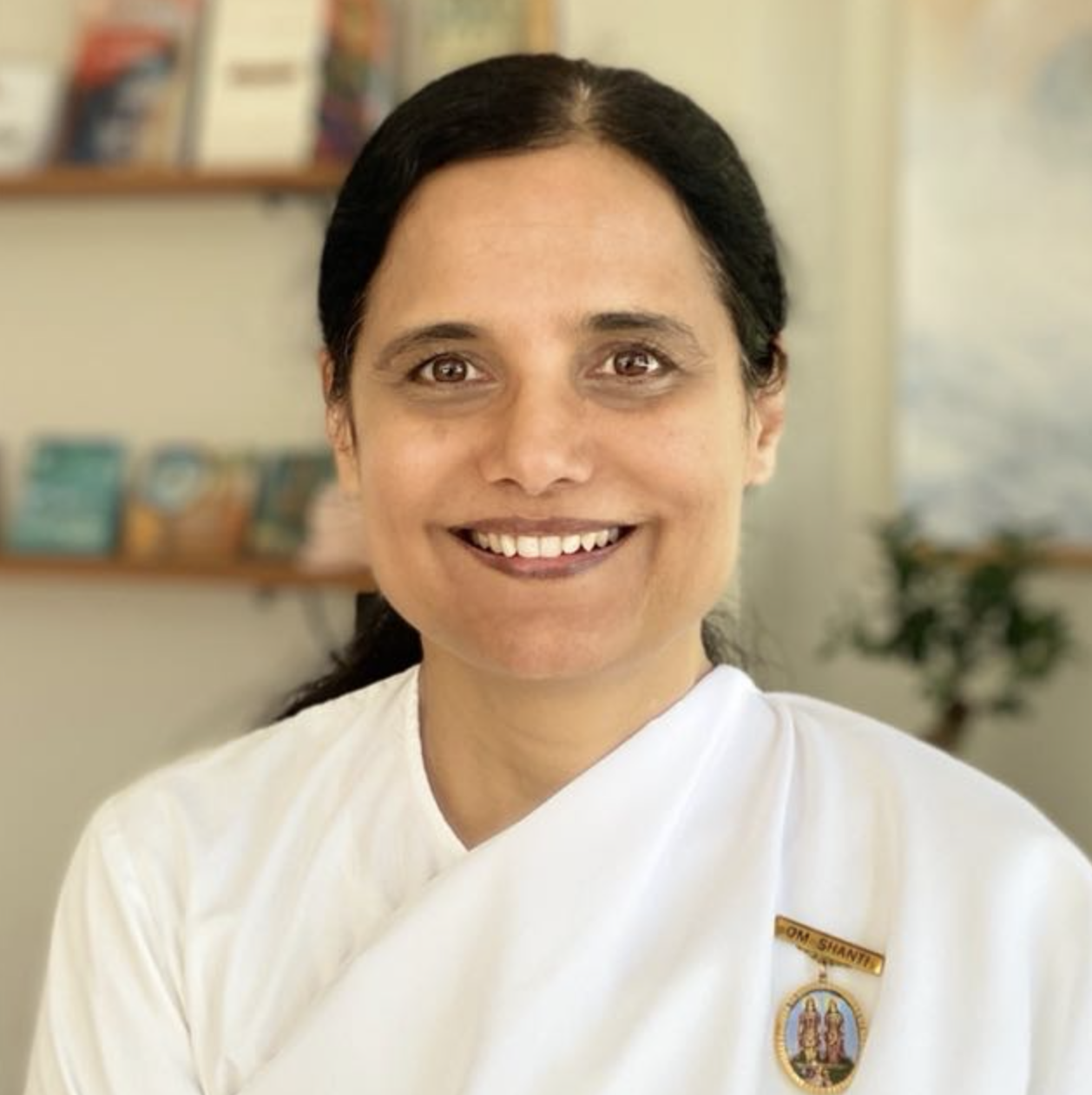
I'm Michael McIntosh and I'm joined with Sister Shireen and We have over 50 years meditation practice and teaching between us as well as many best selling books, courses, programs which you can get for free on spiritualtravelers.org welcome, welcome many of our lovely listeners. Thank you for being here. We appreciate you. Many of you have asked about how to quiet the mind. You know, how do I stop this, this crazy thinking that never ends.
Overthinking, thinking about things that happen, lying in bed, not being able to stop thinking.
And this is a major problem and something we talk about a lot here because the mind affects everything.
And so in today's session we're going to be getting into how do you practically understand what's going on and actually calm it down so you can feel relaxed and at ease.
And what was it like for you, Shreem, when you started meditating with your mind?
[00:01:14] Speaker B: It was bad. It was bad.
The one thing I remember really well was trying to translate my Hindi first is not that great. And then the.
So she was talking, this visiting sister from India came and I was asked to come and translate. It was a ploy to get me in actually. But anyway, I came in to translate and I could not remember two sentences she said, one after the other, right? She would speak and I would forget that two, three sentences before what she said.
And it was really bad.
I really wanted the earth to open up and me to go inside and never come out because all these people were depending on me and I couldn't for the life of me translate. And because my mind was racing so much. It was racing so much.
Well, the good news is there is light at the end of the tunnel. How about you, Michael?
[00:02:24] Speaker A: It got better over time. Yeah, same.
[00:02:26] Speaker B: Oh, after 30 years it got better.
Sorry, go ahead.
[00:02:31] Speaker A: It takes a little bit of practice. A little bit of practice?
Yeah, it's. I remember I never even realized I was thinking, to be honest, until I started meditating. And then I remember sitting down and. And I'm like, well, what am I supposed to do? I said that cross legged. And I'm like, what am I like? No one really taught me how to do meditation. I wasn't sure what I was. So I just sat there and I was noticing sounds like music from something I was listening to or movies or flashes of images. It's almost like discovering this whole new world that I really neglected. I think I was so unconscious of My thoughts and also distracting myself from my thoughts that I just never saw what it was. And it was just, just churning and things spinning around and going all over the place. And I was like, what is this? What is this? And I really thought it was a failed project when I first started thinking this, this, this is not going to happen at all.
[00:03:27] Speaker B: So give us the good news.
Did it take you seven years to get it together?
[00:03:32] Speaker A: Good use is it does, it does calm down. I think it's like once you have a certain practice, once I started learning like how, what to do with the mind, then, then things started to improve fairly quickly. But mastering the mind at the enlightenment level, of course, that takes a bit longer. Yeah, well, there's, there's levels of everything, you know,
[00:03:52] Speaker B: get.
[00:03:52] Speaker A: Getting the final result is going to take time, but we can make improvements today. So that's what we're getting into. So why do we need to calm our mind? Like what happens if the mind is not under control?
You know, there's so many things, isn't there? If we don't calm our mind, then we feel stressed out.
We can't think about the thing we want to think about because we're thinking about all these other things.
Our nervous system gets out of whack, you know, because the mind affects the body.
We can't appreciate being in the now because we're not here, we're somewhere else.
We can be snappy at people or irritated or lose it.
We can't think about what we should be doing. Clearly we can't make good decisions. We can't sleep. I mean, what else happens if we don't get our mind under control?
[00:04:47] Speaker B: The sleeping is the one big thing. And the other thing I was thinking is you really lose your life.
People don't realize that.
A few years back, one of my friends was telling me that, that every time he goes through a depressive episode, he feels like he's lost like four months of his life or something like that.
And I was thinking the same thing actually happens with an overthinking mind.
So let's say you are traveling from work to home in the evening after the workday is over, you're traveling from work to home.
If you can remember what you were thinking in that span of time. Let's say it takes half an hour commute from your work to home. Can you remember what you were thinking in that time?
And if you're not able to remember what you were thinking in that time, and it happened to me, we are all in the same boat.
When we are not able to remember what we are thinking, what's actually happening is we are losing, that's half an hour gone, right? And so if you really go back in yesterday and remember what was I really thinking, and that's the whole day gone, Right? So you compound that over, let's say a month, like how many days? Okay, let's say in a month I was awake 15 days.
Right, the 15 days I was sleeping.
So 15 days I was awake. And in those 15 days, how much of the time did I really have for myself?
Like, was I really being here, paying attention to my life and the people I love around me? Was I doing that?
And so if I'm not, then I have to see in a month, did I lose seven days because my mind is overthinking?
And if I lost seven days because my mind is overthinking, can you imagine how much we are losing in our life because we can't remember what we were thinking? Because it was racing so much?
And so one of the things that I always feel is it's not about the terrible things that are going to happen to me. That's the problem.
The problem is really I'm not able to enjoy the present moment.
I'm not able to be present for my life.
And so I feel that for me is like the biggest loss.
[00:07:40] Speaker A: Yeah, it's. It's shocking to have to not be conscious, not to enjoy being alive and. And also to be run by things that aren't don't feel good and they're causing us harm as well. Yeah.
[00:07:52] Speaker B: You were saying about thinking. And when you sat down to meditate, you didn't even know you were thinking till you sat down to meditate.
[00:08:00] Speaker A: And I'm sure I was aware I had thoughts, but I was never. I wasn't consciously aware that. What is this? What is actually happening here? Not at all. No.
[00:08:11] Speaker B: That's actually very honest, Michael, because really that's what's happening to all of us.
Right. We are not even aware we are thinking.
[00:08:22] Speaker A: No, it's just because it's. It's in the background. It's a bit like if there's a noise, there's always a noise in the background of your house. After a while, you don't notice it, but if it got turned off, you'd be like, something seems different. What is that? You know.
[00:08:35] Speaker B: Right.
[00:08:36] Speaker A: You know, because there's like buzzing sounds in the house and stuff like that. So this is. And, you know, psychologists have studied this and somewhere between 40 and 60,000 thoughts every day, which is basically two self help books, two reasonably sized self help books worth of thoughts every day and 95% of them are the same old thing, round, round, round. And we don't notice them because they just go on and on and on and on and on.
Oh dear, oh dear. So we're going to be looking into what we can do about this.
And first thing is to realize that you can't stop thinking.
You can't stop thinking, right? Because if you think the goal is to completely permanently stop thinking, then you're setting yourself up for feeling miserable, right? Because it can't be done, right? Just like we could say, I'm feeling a bit panicky, it wouldn't be better if my heart stopped beating, right?
Can you imagine? I'm feeling so anxious, it's being so hard. It'll be better if it stopped. It's like what would happen if your heart stopped beating, right? You could be dead. So if we, if we're alive, we're going to think thoughts just in the same way we're going to breathe if we're alive and we're going to think if we're alive, right? Your brain's going to keep working. There's going to be thoughts. So our goal isn't to permanently stop thinking and nobody has stopped thinking permanently, right?
Some people kind of claim that their thoughts have stopped or they got less, but really they're still having some thoughts, right. The difference is as we become more spiritually awakened and we get a better grip of our mind, this, the amount of thoughts we have slows down so there's less of them and the quality of thoughts goes up.
Right? But they're still thoughts.
So first reframe is you're not trying to stop thinking permanently.
The goal is to understand our thoughts and upgrade them and also learn how to release them. There's a whole bunch of things here, but stopping is not the mission. So you can say that to yourself, I'm not trying to stop thinking. I'm trying to learn what's going on and have more self compassion and love. So that's the first thing.
[00:10:54] Speaker B: There's one small thing also is that it's not going to happen a long time. Even though we were joking. Oh, after 30 years, after seven years, it feels like a long time. Seven years. But actually, considering how long it took for our mind to come to overthinking mode, seven years is not that long.
But you do see, like Michael was saying, you do see improvements, but it does take a long time.
It's not like, oh, overnight.
Overnight, I guess if you take some drugs.
[00:11:30] Speaker A: So we have to have a different.
We have to see, like, if. If it's going to take a certain number of years to properly get control of the mind. Fair enough, right? I mean, we're not. I mean, anyone who's a serious spiritual person understands that's the case. So we can't say that final result is the only thing I'm judging my success against. It's more like, well, did I do anything that's somewhat of an improvement today? And then that's a success. And then I a little bit better today, a little bit better tomorrow, a little bit better. And then, so all the way along you're having these little wins and you notice progress.
But it's good to have the expectation that you're not going to completely master your mind by the end of this session. As much as we, of course, wish that you could, it's probably not going to happen. But you can feel better and you can get a grip of it. So that's what we're going for.
So with that said, Shireen, what is the. What is some practices. We were talking about this that some of they can do to start making progress here.
[00:12:31] Speaker B: The first one I was thinking is categorizing your thoughts.
So in Brahma Kumaris, we have five different kinds of thoughts, right? The first, so think of the thoughts as, okay, like think of the base layer, right? Just baseline.
Baseline would be ordinary thoughts, thoughts that you have every day.
And they are also sometimes necessary thoughts. And necessary means that how are you going to do your interview?
How are you going to drive somewhere? How are you going to cook all of those. Those are necessary thoughts.
And then right below the baseline is. Is what we call waste thoughts.
Waste thoughts is obsessive thinking, thinking about other people, comparing yourself. All of that is waste thoughts. And then right below waste thoughts is negative thoughts. And negative thoughts would be, I'm no good, they are horrible people. The world is out to get me. You know all of those things, right? Those are anger and ego thoughts. Based on any of those, that would be negative thoughts.
Now, above the baseline, the first level up is positive thoughts. Positive thoughts could be courage and peace. And you know, I can do this, right? All of those are above.
They are just positive thoughts. And above the positive thoughts are elevated thoughts or spiritual thoughts, which is, I'm a soul, I am peace, I'm connected with God, whatever. Those are the.
Whatever you can manage, right? But there are spiritual things that you're thinking about, not based on the physical world, but there's spiritual concepts you're thinking about.
And so that would be five level of thoughts.
And so the reason why we are giving you this five level of thoughts is because I want you to do one little exercise for me. If you don't do anything in this podcast, just do one thing.
Take half an hour out of your time, and we have a worksheet, and we will link the worksheet in the description here. It will be in a Google Docs worksheet. I want you to pull out that worksheet and I want you to take half an hour and see.
So in that worksheet, all the five level of thoughts are given.
I want you to see for half an hour, just as a detached observer. Don't need to go into them, don't need to analyze. As soon as a thought comes, you mark it.
Either it's elevated, either it is waste, either it's negative. Just keep marking, right. For half an hour, every thought that comes, put a tick to one of those five categories of thoughts. And this exercise really is just about observation.
And so what happens when you do this kind of observation is your mind actually starts to slow down and you will notice this. Like, you do this exercise for at least a week or so, you will actually notice what's happening with your mind.
Like Michael was saying, he wasn't even aware he had thoughts. Right now, not only you are aware you have thoughts, but you are aware you have five levels of thoughts, and you can see which level is going on.
And so the first thing is that half an hour every day for the next week, just categorize your thoughts to see where they are landing.
[00:16:38] Speaker A: So you're not trying to change them, you're just trying to see what they are. So, like, someone might be sitting there and they got their piece of paper, you know, what are my thoughts on? Okay, so what am I thinking about? Oh, I'm thinking about this person again. Right. So that's a waste thought. Why am I doing anything about this person?
Oh, I'm thinking about some random thing on the Internet. Oh, what's going on? So waste thoughts are often the biggest category, and they're things that don't directly improve your life or anyone else's life and aren't really doing any real good. Is that. Is that how you'd categorize them?
[00:17:12] Speaker B: Right, right. Obsessive thinking.
Yeah. Your mind is wandering at random places. Yes.
[00:17:21] Speaker A: Yeah. So you can even write down what you're thinking about or just say it. Is that what you're suggesting to say
[00:17:27] Speaker B: it might be too much to write down what they're thinking.
The exercise is just to categorize them. A thought comes just tick wherever you think that thought needs to land.
[00:17:40] Speaker A: And then you tick it again and
[00:17:41] Speaker B: again and again, again and again and again.
[00:17:44] Speaker A: See which one has the most ticks
[00:17:45] Speaker B: and you see which ones has the most ticks. The.
The point of the exercise is to really see what's going on in your mind, right?
And you can see over a week how much it's going to improve once you start categorizing. You see over a week, how much your thoughts really improve, how much your mind really comes under control. You see it.
[00:18:12] Speaker A: It's very interesting. Yeah, I've done some version of this at different times, and it is useful. I've even written down what I'm thinking about because most of the time we don't know what we're thinking about unless we take the time to have a good look at it and write it down.
So is it waste thoughts? Is it about a person? Is it about a problem? Is it about a situation?
Is it some random. I need to, like, why wonder how so and so. What's the name of that song? I mean, this is what I noticed myself. Oh, what's the. I will remember the random research. What about.
So there's. I think waste is in massive category, right? And then necessary thought just like, okay, I need to go to the store. I need to take care of this thing. I need to pay this thing. I need to send this email to this person. It's a bit more practical, right? And then positive thoughts are things like, I can definitely. I'm gonna make this happen. I'm gonna determine thoughts. You know, yes, it's going to be done. It's going to be great. You know, we're going to push through. Whatever, Whatever, right? This is actually solving a problem in some way. It's like getting the next level.
And then eternal thoughts are the sort of thoughts we do with meditation. I'm an eternal being.
I'm not this body. I'm safe. Everything's going to be all right. You know, everything. The drama, the great game of life, the wonder of life is happening as it's meant to be. These. These are kind of expanded experiences. God is powerful, these sorts of things.
[00:19:40] Speaker B: One thing we have to be careful of is if I'm doing a task, any task, let's say I'm meditating.
And while meditating, I'm thinking I needed to take care of that Google Drive. I didn't take care of that Google Drive, Even though that feels like a necessary thought because it's coming at the wrong time, it's a waste thought.
And because those. It's like the mind wandering, right? If you're doing a task and there's research on this, if you're doing a task, how well you do that task with how much presence you do, that task is where your happiness lies.
So let's take the research was, I think Killingsworth and Gilbert in Harvard, they researched about the mind wandering, right? So let's say you have a choice of folding laundry or a vacation in Paris.
Most people will always pick the vacation in Paris.
But actually if you completely with full presence of being here and just being in the moment and you fold your laundry, you will be a lot happier than if you go on that vacation to Paris and your mind is wandering all the time while you're on vacation. Or you're having lots of ways, thoughts.
It's so dirty. It's so, you know, why are all these scam artists coming after I was
[00:21:35] Speaker A: at home, I wish I was, you know, it's. Wouldn't that be better?
[00:21:38] Speaker B: Yeah. So instead of. So we always think, oh, vacation in Paris. But the vacation in Paris is being destroyed by our inability to focus, by inability to stop the mind wandering. And what they found is irrespective of what you're doing, even if you feel your mind is wandering to a pleasant place, what they discovered is that a wandering mind is an unhappy mind.
And 47% of the time your mind is wandering.
So 47% of the time you could be happy and you're unhappy.
And so like I was saying, for me, it's not about something grand I'm missing.
I'm just missing my life, right? What is the potential for my life that I am missing? We think, oh, if I have the next million dollars, I'll be happy. If I have this job, I'll be happy. If I have that relationship, I'll be happy.
But all of your happiness is dependent on you.
It's dependent on your.
And so you can, you can be happy wherever you are, doing whatever, even folding laundry, you can be happy if you have your mind under your control.
Hence that exercise is really, really important because you can get your mind under your control.
[00:23:19] Speaker A: Starts with, with awareness.
It's the, the mind.
If the mind is where the body is, then we can be all right with everything that's going on. It's when we don't like what we're experiencing. We want to be somewhere Else why did that person not get back to me? How come this hasn't happened yet? Why is this thing. Why did this person not do this thing?
You know, it's basically some version of, I'm not happy with the way things are and I want them to be different.
And not being with what is in that moment, isn't it? And not thinking about eternal, eternal things. The benefit of eternal things is they're eternal. So they're like on a different category, a different scale.
So it's like the eternal things is we're eternal spiritual beings, God is eternal and the drama of life is eternal.
And so those things are like, you can just relax, everything's fine exactly as it is, and everything's safe.
So that's why that they're the best thoughts to have. Whereas everything else scaling back from that is more various forms of trying to change everything.
[00:24:35] Speaker B: Only when you have eternal thoughts can you really be in the moment for long periods of time.
That's the weirdest thing, right?
You think you're walking into eternity, but you're walking into the present moment.
[00:24:51] Speaker A: So these are wonderful practices to just be aware. Because becoming conscious of what's going on is the first step. And it's not just the first step. It's a continuously ongoing thing. It's not something we do once and say, now I know what's going on with my mind. It's something we can do all the time.
So what are you thinking about? Is it, is it other people? Things you can't change? Random stuff on the Internet? Because all of that stuff, it seems fairly mundane. But when you add it all up over and over, you know, thousands and thousands and thousands of thoughts, it causes all this stress in our body, in our mind, in our life. We can't enjoy anything.
So becoming aware of it, just like with meditation practices like yoga, Nidra and body scan, just becoming aware of, like become aware of your forehead, become aware of your eyes, become aware of your shoulders.
Just, just be awareness. Let's something relax. Just the, just noticing it.
So just noticing the thoughts by doing it, you're pulled into a witness position because you're not stuck in it anymore. You're saying, what is this thing happening?
And oh, that's interesting. And my personal feeling around this is to have a sense of curiosity and no, no negative thoughts about the negative thoughts. Right?
[00:26:16] Speaker B: Neutrality.
[00:26:17] Speaker A: If I'm like, I'm having, I'm having so many negative thoughts, I'm such a bad person, I should be better than this, blah, blah, blah, then that's adding to the waste thoughts category, isn't it?
[00:26:26] Speaker B: Right.
[00:26:27] Speaker A: So it's very helpful to say, oh, that's interesting. I'm thinking about this again.
Okay, interesting. Let's put a little tick there. Oh, still going on, is it?
So a certain sense of humor, a certain lightness, certain love, their compassion, you know, and it takes the edge off of it and then we can move ourselves up towards these higher level thoughts.
How do you think about your thoughts when you're aware of them? Do you. Have you gone from not liking yourself because of them to feeling a bit more neutral? Like what's been your progression?
[00:27:01] Speaker B: No, that is one of my efforts is to be neutral.
To be neutral, to have really love.
Right.
And that's what I want to tell our listeners. Have love for yourself, right? Don't beat yourself out too much. Right. Make effort. Right. We do need to like this whole categorizing your thoughts, sitting half an hour with it is really helpful. That's the effort, that's the work we need to do. The inner work we need to do.
But along with the inner work, right. Just really have love.
Mostly I try to be neutral.
I watch it like I watch it as a witness.
[00:27:51] Speaker A: And because we need, we need compassion and we have to think that the reason these thoughts are there, there's a reason for it, right. It's not like they just randomly came out of nowhere. Like we've been like, for example, why, why do we have so many negative thoughts or wasteful thoughts?
Most of the time it's because we're feeling disturbed and we want to distract ourselves, right? I mean if I speak for myself, if I'm not feeling good and I'm not doing the practices, then I'll try and distract myself from it. Right. And I might think, oh, what's going on with this thing? What's going on with this thing? So it's just avoiding something by looking at something else.
And then once that goes in that direction, then there are more and more thoughts about it.
But the, the reason for that is just a sense of distress and there's an internal mechanism to try and feel better. So we have to have compassion. What I'm trying to do here is feel better and more relaxed. It's, it doesn't work.
That's why we need to have a different method. But the internal intention is just to try and soothe, have some self soothing and feel better about.
[00:28:59] Speaker B: It's a hard place to be neutral. We either oh, we are doing so good or we are so horrible, right. It goes from this extreme to this extreme. Neutral. Neutral.
[00:29:13] Speaker A: Yeah. You can always. This not have, like, imagine it's not your mind. Imagine it's just our mind. It's just a thing. Then you can. It's easier to be neutral because you're like, let's imagine this is nothing to do with me personally. It's just like a radio channel or like a TV show or something.
And. And you're just watching it going, oh, okay, what is. What is this? You know, this is interesting. Okay. Tick, tick, tick, tick, tick. You can write down what they are if you want, because it's. Because most of the time they're the same thing over and over again.
I'm thinking about this. This. Like, for example, right now there's some sports going on. I'm not going to mention it because it keeps changing, but I'm like, oh, I wonder what the score is. Right. I'm just being honest. Right. So.
So. But once it ends that. Then it might be another thing. Oh, I wonder about this other sport, you know, because I quite like certain sports, so that's a certain. But it just repeats itself. Right? Or what's going on with this person? Or what's going on with. Or what about my business? What about this? So it just goes round around in slightly different ways. So you can even write down what those general categories are if you want to.
Yay. So you want to do a practice.
[00:30:23] Speaker B: Yeah.
[00:30:24] Speaker A: Detached. How do we do that? Yeah.
[00:30:27] Speaker B: You know, we were talking about the fifth level, right. The highest level, level of thoughts, which is elevated or spiritual thoughts.
And a very simple, profound, not so easy is, I am separate from the body. I'm a spiritual being.
This is the human body that I was given.
And to watch myself as separate from the body, and people might ask, how is that going to help with my mind?
Are you thinking that?
You're not thinking that, Michael?
[00:31:10] Speaker A: I'm.
No, I don't know. But we, our listeners can tell us what they think. They're our lovely listeners. Yeah. You might think, well, how is being a spiritual being gonna change your thought? Well, it is a different thought at least, isn't it? Thinking that way is a new thought. A different thought.
[00:31:26] Speaker B: It's a new thought. It's a different thought. But what happens is, because we have collapsed, we have collapsed the soul and the body and everything else, we have just collapsed.
And so because we have collapsed all of that, the mind is overrunning, just going, going, going, going, going.
And once we start separating it out and once I see myself separate, even that very simple, profound Practice of I'm a separate spiritual being in this body has been given to me. The mind has been given to me. I'm separate from all of this. Just to see myself that way really reduces mental activity so much because you start un. Collapsing it, you start taking it apart. And the more you take apart, the more your mind starts relaxing.
There was a exercise one time experiment, you could say, and the experiment was about a rubber hand.
So let's say there was a man and there was an experimenter.
And the first, the experimenter told the man, put both your hands out like this.
And then he stroked both hands for a few minutes, right?
And then he said, okay, take one hand out and I'll put a rubber hand right here instead of this hand. You just take this hand and put it away.
Now he strokes the rubber hand and this hand, and then at one point, he just takes a mallet and hits the rubber hand.
And every single time, the people who are, you know, the hands are being stroked and stuffed, the man, every single time, they jump.
And the reason they jump is because they have owned the rubber hand, right? They thought, it's my hand.
And so now you see how much owning something is making you feel so anxious and so overworked. Your mind is so overworked. And so that small separation of soul and body really help?
[00:34:04] Speaker A: Yeah. I mean, if you can get attached to a rubber hand in just five, 10 minutes or something, then imagine what we're. What's going on with the body that we're been involved with for so many years all the time. Of course we love our body. The body is wonderful. You know, we look after the body, we take care of it, and we're gonna leave the body. We're spiritual beings and we'll still exist when we don't have a body.
So we're just using this thing while we have it in this moment. So just like we're separate from the mind, we're also separate from the body. And it's a very powerful practice, advanced practice to help calm the mind, because that's. That gives us spiritual power to get into it. It's like if you're standing in a bucket, you can't move the bucket. You have to get out of the bucket and then you can move it. It's a bit like that. We can't control the mind when we're stuck in it, in the body and in the mind.
So would you like to lead us in a little practice, Shireen?
A drill, maybe detach from the body?
[00:35:14] Speaker B: Yeah, a drill.
Okay.
[00:35:18] Speaker A: So, and just to be clear, a drill is basically a spiritual practice. Why do you call it drill? What's the meaning for that?
[00:35:27] Speaker B: So we, let's say we have a physical drill. A physical drill is take your hands, put it like this, put it like this, then put it like this, right?
[00:35:37] Speaker A: Exercise.
[00:35:38] Speaker B: You have a very specific set of exercises that you do. Like sequence this, then sequence this, and then sequence this, right?
So the same way a spiritual drill is, you have a sequence of thoughts for your mind.
We have proved to ourselves and everyone else that our mind can go on for 100 years if it let it, right? It'll just go, go, go, go, go.
But since it's already going, going, going, going, we give it a sequence of thoughts so that it's going according to our control.
And so this practice that we mentioned about seeing yourself separate from the body, so that actually can be a beautiful spiritual drill. And it's a very three step drill. Drill.
And the three step drill is you.
I want you to.
This is step number one is your eyes, right? Just see the body with your eyes.
That is step number one.
Step number two is you go inside and see yourself as a spiritual being, as a point of living light, just as luminous light, see yourself as a spiritual being. That's step number two.
And it takes a little bit of time to come to step number two. But with practice, you can do this. We can all do this with practice.
And so, and step three is I'm inside, right?
And I'm separate. And I'm watching the body. I'm witnessing the body. The body is not me. The thinking, feeling, being is me.
And the body is separate.
So those three steps, and you keep looping those steps again, step number one, see myself separate, see the body, then go inside, see myself as a soul.
Then you're seeing yourself as a soul. And you're seeing the body. And you're realizing the thinking, feeling, being is you, the soul.
Would you like to add anything, Brother Michael?
[00:38:28] Speaker A: It's nice drill. Let's just do it a few times together because we can have an experience.
So you can just become aware, look at your body.
So you're the one looking at the body.
And then who is it? You're this beautiful shining star, like a tiny point behind the eyes, separate from the body.
And the one who's experiencing everything is you, this beautiful peaceful being.
And becoming aware of the body, see it, Become aware that you are that soul behind everything, pure consciousness.
And aware that you're the one watching everything happening.
And you're safe and secure.
And then one last time, be aware of the body and become aware of yourself as that spiritual being.
And aware that you are that different from the body, experiencing everything.
Ah, wonderful, wonderful. Thank you, Shree. What a great drill.
[00:40:53] Speaker B: Thank you for doing that, Brother Michael.
[00:40:56] Speaker A: Always a joy. Always a joy. We can. So we can do more and more and more. See this quite quick and easy. And remember that we have to. The reason we do drills is because as Shreem was sharing, we. We can't stop the thoughts. So you have to use the thoughts. And the best way to use the thoughts is to do these drills. So you're doing. First I'm doing this focus on this thing, then focus on this thing, then focus on this thing. And then loop back to the beginning and do it again and again and again and again. And we teach different drills in these different episodes.
And Shereen has some massive book of drills somewhere that she hasn't published. Somewhat massive book.
[00:41:38] Speaker B: Okay, that must be my 10th book I didn't publish. But let's. Let's leave it.
[00:41:43] Speaker A: 10th, 10th book of drills.
So.
And the benefit is that you're using your mind to calm the mind. You know, you're not saying, I shouldn't be thinking. You're actually using it to move in a direction that gradually calms itself down. And then you think, oh, I feel so much better now.
So what we discussed today is you can't stop your thoughts.
Just like there's no point if you. If you're not thinking, it means you're dead.
So if you're alive, even when we
[00:42:17] Speaker B: are sleeping, we are thinking.
[00:42:20] Speaker A: Yeah. I mean, there is deep sleep where you're not thinking for a short amount for. But we don't know exactly what happens at that point, actually. But the dreams, certainly we're thinking, so but even then we don't really know, do we? But certainly there's thoughts happening and then we wake up and there's thoughts, thoughts, thoughts, thoughts, thoughts. And so as long as you're in a body, you're going to think something. I've heard from various spiritual teachers that in when people are very highly advanced, they have somewhere around 10 thoughts a second or less. Whereas now it's. I don't know what it is. It's probably like 60 to 100 or something. Because they can. And the more stressed out we are, the more thoughts we have.
So they're not going to go away, but they're going to get less and. And there'll be happy thoughts. So we shouldn't think thoughts are Just all automatically bad.
Oh, any thought is. Because I know some, some people are told that all thoughts are terrible. That's kind of some people's approach is that any thought at all is bad thing. That's not really true. Some thoughts are very, very useful and they're very helpful. So, so you don't have to stop thinking, but we can think better thoughts. And you want to share serene. Remind people of their homework.
[00:43:39] Speaker B: The 30 minutes for the next one week.
Right? And it's in the Google Drive, in the description.
The sheet is there and the different levels of thoughts are there.
And take 30 minutes of your time and watch as a witness your thoughts and tick where the thoughts are going first. Take a moment to read the sheet and then take where the thoughts are going. Just watching and categorizing your thoughts really helps.
[00:44:17] Speaker A: Yeah, it's hugely powerful and it doesn't take long and you can have it around and you could carry it around with you, this piece of paper and just add to it and then you'll know what you're dealing with and then, then they can start to improve them. And then you could do this drill.
We also have lots of guided meditations on our website, spiritualtravelers.org all for free. So you can get those and they can help you with your mind. That's the benefit of guided meditations. If you're listening to someone else guiding you in meditation, then you're not having your own thoughts as much at least.
Or if you read a book that's inspiring, then you're thinking other people's thoughts, you know, and that's probably why listening to podcasts is useful because during the time you're listening to this podcast, you're not probably thinking as many other thoughts. So exposing yourself to high level things is also very helpful.
[00:45:10] Speaker B: I want to share one more thing and then a blessing is that good.
[00:45:18] Speaker A: So go ahead.
[00:45:21] Speaker B: There has been research, because you've mentioned meditation just now.
There's been research on people who meditate and their brains and what the research shows. Sarah Lasser, I think is the name of the lady who did the research that, I mean, these people are regular people, like who have jobs and children and mortgages.
Those are the ones she documented.
They did brain scans. The part where they, you know, the overthinking part was much less really, the stable part was a lot, a lot more. And it didn't all happen overnight. Right? It happened, I mean, during their life of learning to meditate.
And what you were sharing, brother Michael, is that many people tell us that you can't meditate, right? I can't meditate.
I'm just not the kind to meditate. But this is a very simple technique and that's meditation.
And if we practice just this much, right, Then we, long term, we are really investing in ourselves.
That that's the benefit is long term, we are investing in ourselves.
And it's very simple to do because meditation is not some, oh, I can't do it. This is simple meditation we can do.
[00:47:07] Speaker A: And not only is it simple, anyone who says they can't meditate is not really understanding what meditation is because meditation is just focusing your mind and your attention on anything if you think about it, right? So if I'm thinking about problems, I'm meditating on my problems. If I'm thinking about a person, I'm meditating on a person. If I'm thinking about like the sky are meditating on the sky and everyone is meditating all day long actually, if you think from that definition, it's just we're choosing to go from meditating on stuff that doesn't bring us any benefit or stresses us out to something that does.
But the idea that people are on, I mean everyone's already meditating all day long.
So there's nobody in the world who's a bad meditator. It's just the.
You might not be good at focusing on eternal things.
Like for example, let's say someone is worries all the time. They're actually an exceptionally good meditator and not. And they're so good that they can work themselves up into a panic attack generally. That's actually quite a high level skill because if you think the certain thoughts again and again and again and you can change your body to the point where it's radically different state, that's advanced meditation, actually worrying. You know, it's just that we could do a different sort of meditation and it would get better results.
So worrying or feeling deep peace are essentially the same thing in a different direction, but the process is exactly the same.
So hopefully this has been helpful for you and thank you so much for your lovely presence. Always a pleasure to be here. And we will close the session with a blessing from Sherene's book, God's blessing for you
[00:49:08] Speaker B: kindness.
All right, all our listeners and viewers, I want you to be kind to yourself.
This is God's blessing for you kindness.
Your heartfelt desire to uplift others has become a living reality through your actions.
Your boundless generosity has become integral to who you are, imbuing your journey with love and joy as you witness others flourish.
[00:49:50] Speaker A: Thank you very much. And thank you everyone for your beautiful presence.
And just to remind you that we have lots of free courses and books and meditations on spiritual travel.
You're welcome to check it out with emails and blessings.
And if you have any questions for us for a podcast episode, there'll be a link in the description where you can ask us a question and we can answer you. We'd love to do a session based on what you want, what you need, and if you enjoy the podcast, we of course really appreciate you leaving a review.
And if anyone else needs this, feel free to share it with them as well.
So till next week, thank you for your beautiful presence. Have a beautiful week and we will talk to you soon.
Yay.